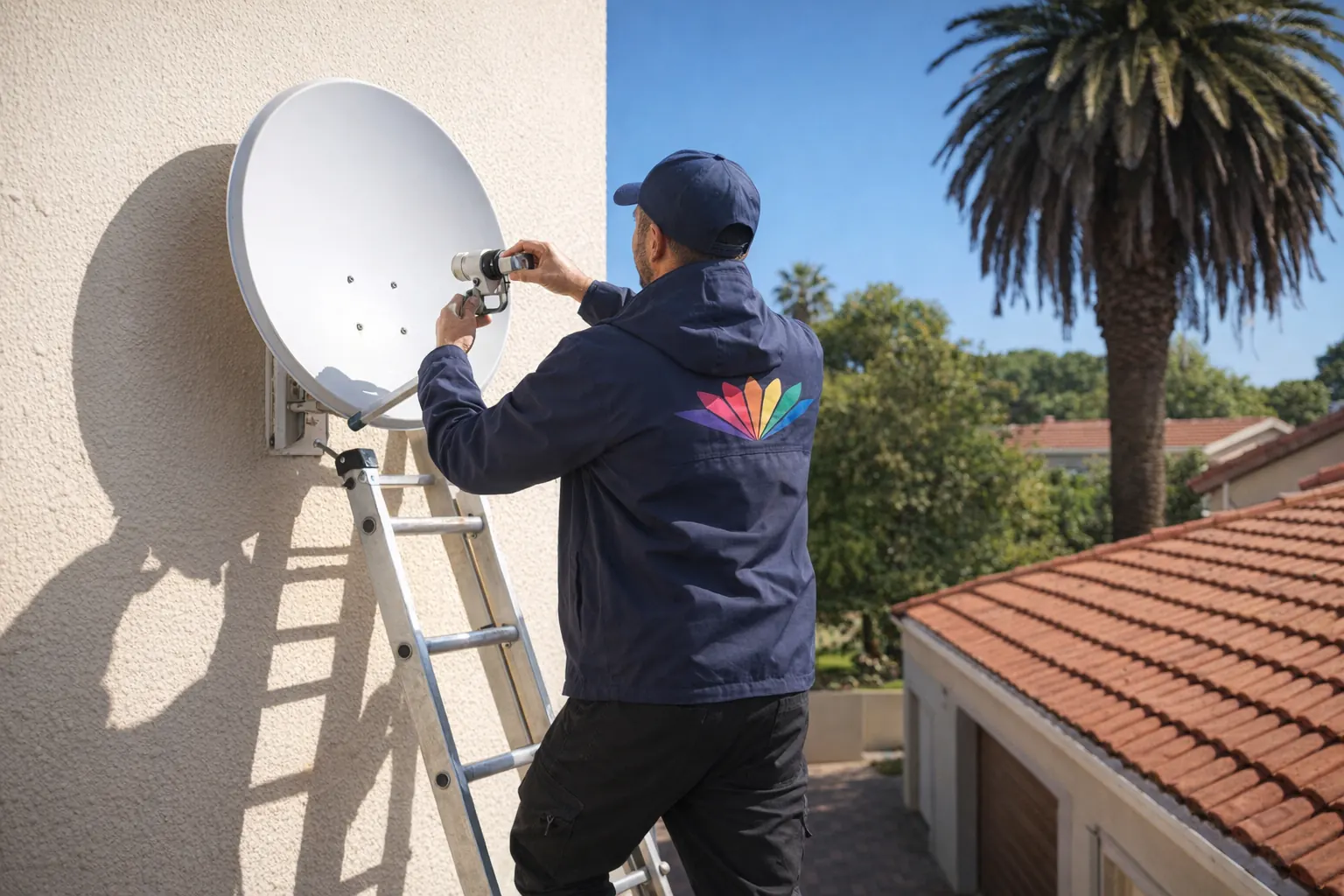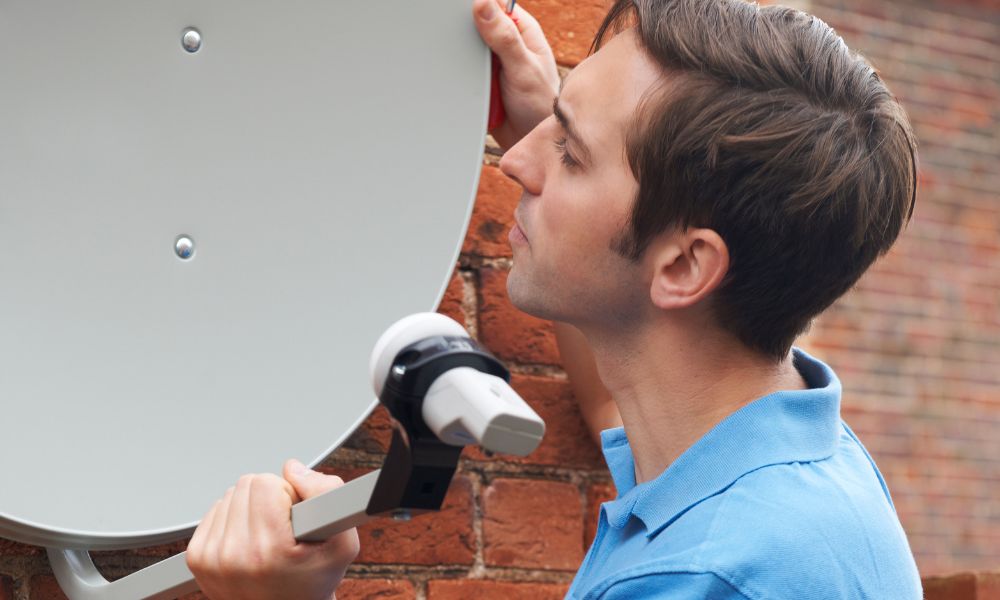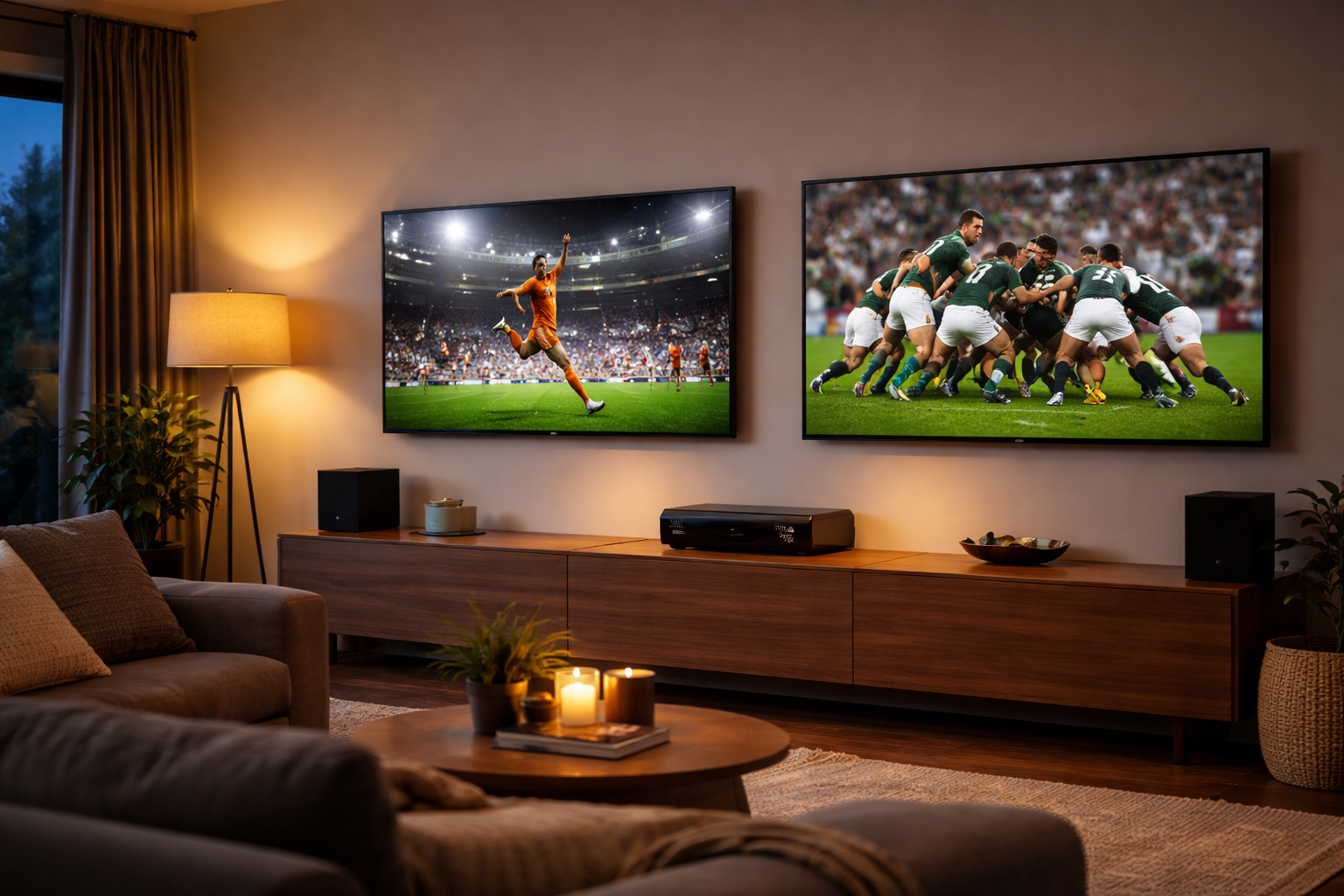
To schedule a DStv installation in South Africa, three things need to be settled before you pick up the phone. You need the decoder and smartcard you intend to use, a decision on exactly where the TV is going, and an adult who can give the installer access on the day. Get those right and the job is usually booked and finished within a week, in a single visit. Get them wrong and you pay a call-out fee for a visit that cannot be completed.
- Booking is the easy part. Being ready is what decides whether the job finishes in one visit.
- There are two routes: DStv's own booking page if your kit came with an installation voucher, or booking an installer directly for relocations, extra points, upgrades and faults.
- You need an active subscription, a decoder and smartcard, a plug point near the TV, and a clear north-east view of the sky for the dish.
- If you rent or live in a complex, get permission in writing before the installer arrives.
- Block out two to three hours for a standard single-view installation.
Two ways to schedule a DStv installation
People searching for how to schedule a DStv installation usually land in one of two situations, and they are booked through different channels.
If you have just bought a decoder — particularly a kit that came with an installation voucher — MultiChoice runs its own booking route. Its DStv Accredited Installation page is where you find an accredited installer, schedule the appointment, and track the status of a job already logged. Voucher installations may only be carried out by a DStv Accredited Installer.
If your system already exists and something needs doing to it — you are moving house, adding a second TV, replacing a dead decoder, or chasing a signal fault — there is no voucher and nothing to allocate. You book an installer directly. That is most of the work we do, and it is why we take bookings by phone and WhatsApp rather than through a queue: you choose the day, and the technician who quotes is the one who arrives.
| Route | Best for | How you book | What it covers |
|---|---|---|---|
| DStv Accredited Installation page | New decoders and retail kits bought with an installation voucher | Online, on dstv.com | A standard single-view install by an accredited installer |
| Booking an installer directly | Relocations, extra TV points, upgrades, faults, realignments | Phone or WhatsApp, direct | You pick the day; the technician who quotes does the work |
Neither route is automatically cheaper or faster. What matters more is whether the person who arrives is competent and whether you can reach them again if the signal drops two weeks later. If you are weighing that up, it is worth reading how to check that you are dealing with an accredited DStv installer before you commit to anyone.
What you need before you book
This is the part that gets skipped, and it is the single biggest cause of a wasted visit. Before you schedule anything, work through the list below.
- An active DStv subscription, or a package chosen. The installer can mount and aim a dish without an active account, but nobody can confirm the system works until the smartcard is active and the package is live.
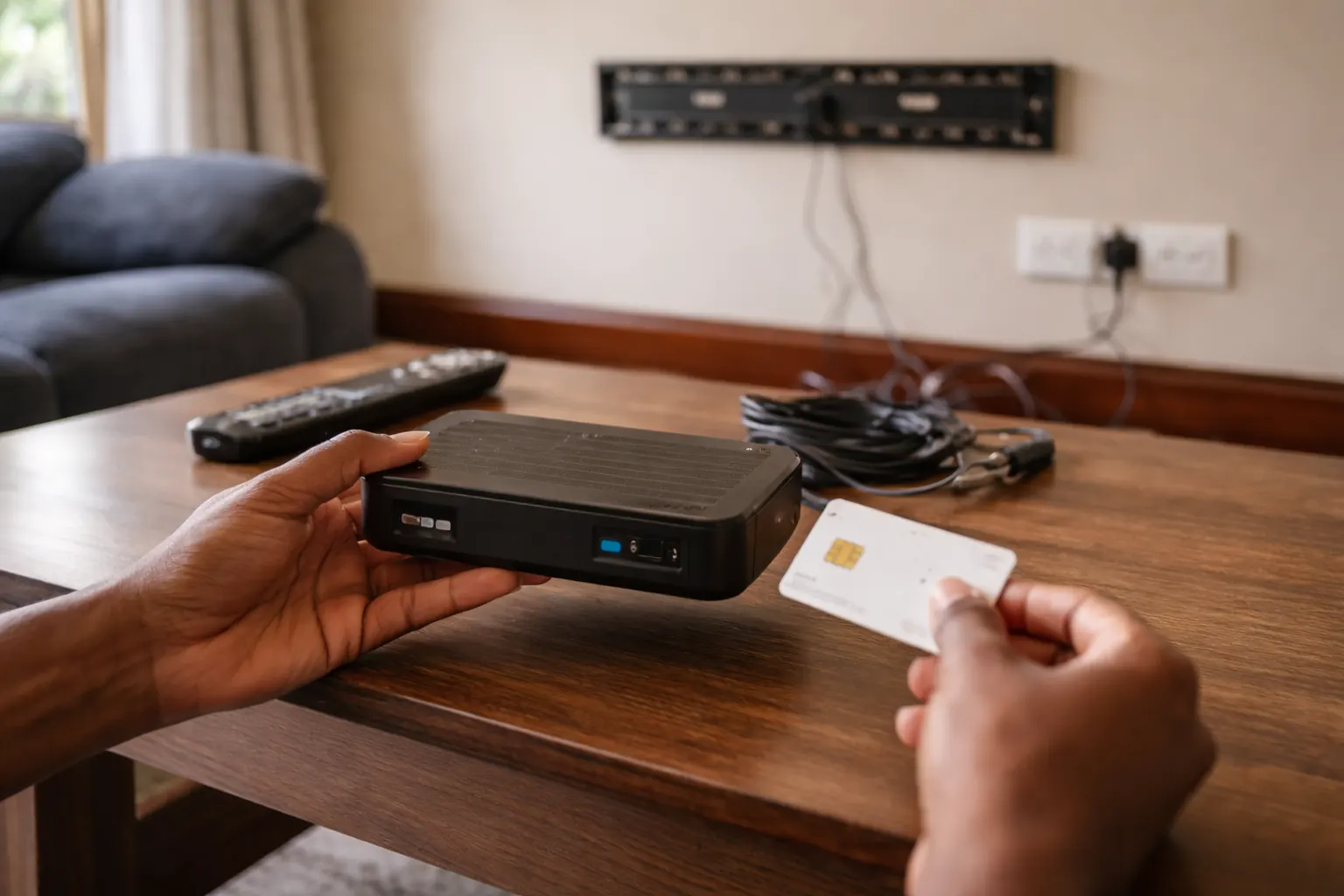
- A decoder and a smartcard. Either the one you already own, or a new kit. Check the smartcard is physically present and not snapped — they are easy to lose in a move.
- A decision on where the TV goes. Not roughly. Exactly which wall, at what height. Moving the point afterwards means a second cable run and a second charge.
- A plug point within reach of that spot. A decoder needs mains power. If there is no socket on that wall, you need an electrician before you need an installer. Adding a fixed power point is not work a DStv technician is qualified to do.
- Somewhere the dish can actually see the satellite. Every DStv dish in South Africa aims at Intelsat 20 at 68.5°E, which sits roughly north-east from anywhere in the country. A wall, a neighbour's roof or a large tree in that line will cost you signal no matter how good the installer is.
- Permission, if the property is not fully yours. Tenants need the landlord's go-ahead to drill and mount. Sectional-title and estate residents almost always need body-corporate or HOA approval for anything fixed to a roof or an external wall.
What has to be ready on the day
Booking a slot is a commitment on both sides. On ours, a technician and a vehicle are allocated to you for a block of hours. On yours, these need to be true when we arrive:
- Someone over 18 on site for the whole visit — not a domestic worker or a child left to let us in, because decisions about drilling and cable routing get made during the job.
- Access to the roof or the mounting wall. Locked side gates and alarmed roof hatches stop work dead.
- Space to work. Furniture moved away from the TV wall, and a clear path for a ladder.
- Dogs secured. Said without judgement — a technician who cannot safely cross the yard cannot start.
- Parking the vehicle can reach, ideally within sight of the work area.
How long to block out
A straightforward single-view installation is a two to three hour job — mounting and aligning the dish, running the cable, terminating it, setting up the decoder and scanning in the channels. Add time if there is a long or awkward cable run, if the roof is steep or double-storey, or if you are having more than one point done.
Do not book it as the last thing before you leave the house. Aligning a dish properly means peaking the signal with a meter and then confirming a stable reading, and that is the step people rush when the customer is standing at the door with car keys. It is also worth being present for the handover so you see what a normal signal reading looks like on your own system.
Picking a slot that actually works
A few local realities are worth building into your choice of day:
- Weather. Nobody safely aligns a dish on a wet roof in a Highveld thunderstorm. Summer afternoons in Gauteng are a genuine risk for a late-day slot; a morning booking is more likely to run on time between November and February.
- Load-shedding. The decoder has to power up, download its software and scan channels before anyone can sign the job off. Check your area's schedule and avoid booking into a slot with a stage cut in the middle of it.
- Month-end and paydays. These are the busiest booking days in this trade. If your timing is flexible, mid-month gets you a wider choice of slots.
What it costs to book
Our minimum call-out fee is R550, which covers the visit and diagnosing the system properly with a signal meter. For a new install, the labour sits on top of that and depends on what the job involves — a standard single-view installation, an Explora setup and a multi-point job are three different pieces of work. We have written the full breakdown, including what the dish and decoder cost on their own, in our guide to DStv installation cost in South Africa.
Why installations get delayed or cancelled
Most of the jobs that fall over on the day fall over for reasons the customer could have headed off at booking. In rough order of how often we see them: no body-corporate approval; nobody over 18 on site; no plug point where the TV is going; the smartcard missing or not yet activated; and a mounting position with no clear line of sight, usually because of a tree that has grown since the last dish went up.
The last one is worth its own thought. If your old dish worked fine for years and the signal has slowly got worse, you may not need a new installation at all — you may need a realignment or a relocation of the existing dish, which is a smaller and cheaper job. Our satellite dish installation page sets out what each of those involves.
We cover the whole country, and Gauteng most densely of all. A booking for DStv installation in Centurion and one in a smaller town are handled the same way, and the difference is usually how soon a technician is free rather than what the job costs. You can see the full range of work we do on our DStv installation home page.
FAQ
How long does it take for DStv to be installed?
A standard single-view DStv installation takes two to three hours from arrival to a working, scanned-in decoder. Extra TV points, double-storey roofs and long cable runs add to that, and a job with more than one decoder can run to half a day.
How much does a DStv installer charge?
Our minimum call-out fee is R550, and installation labour is charged on top depending on the work. A standard single-view installation runs from around R800 to R1,500, while an extra TV point is R350 to R600 per point. Always get the call-out fee confirmed before booking.
What do you need for a DStv installation?
You need a decoder and smartcard, an active or pending subscription, a plug point near the TV, a mounting position with a clear north-east view of the sky, and an adult on site to give access. Tenants and complex residents also need written permission to mount the dish.
Do you pay DStv after installation?
You pay MultiChoice for the subscription and the installer for the installation — two separate payments to two different parties. The subscription is billed monthly from the date your package goes live, while installation labour is settled with the installer on completion.
What do I do if my DStv says installation wizard?
The installation wizard is the decoder's own first-time setup screen, and seeing it is normal after a reset, a software update or a new install. Follow the on-screen steps to select your dish type and scan for signal. If it loops back to the wizard or reports no signal, the dish alignment or the cable is the problem, not the decoder.
How much is DStv full installation at PEP?
PEP sells DStv decoders on their own and also runs bundles that include the dish and installation, so the answer depends on which deal you take. Those prices move with promotions, so confirm the current one in store. What matters more is the small print: a bundled or voucher installation covers a standard single-view setup only, and does not include linking a second TV or another decoder.
Can I schedule a DStv installation for a Saturday?
Yes, weekend slots are available and they are the first to fill. Book several days ahead if you need a Saturday, and expect mid-week mornings to offer the widest choice of times.
- DStv Accredited Installation — MultiChoice's own page for finding an installer and booking a voucher installation.
- Track your DStv installation — check the status of a job already logged with MultiChoice.
- Find an accredited DStv installer or dealer — MultiChoice's directory, searchable by area.
Need Professional DSTV Installation?
Our accredited installers offer same-day service across South Africa.